
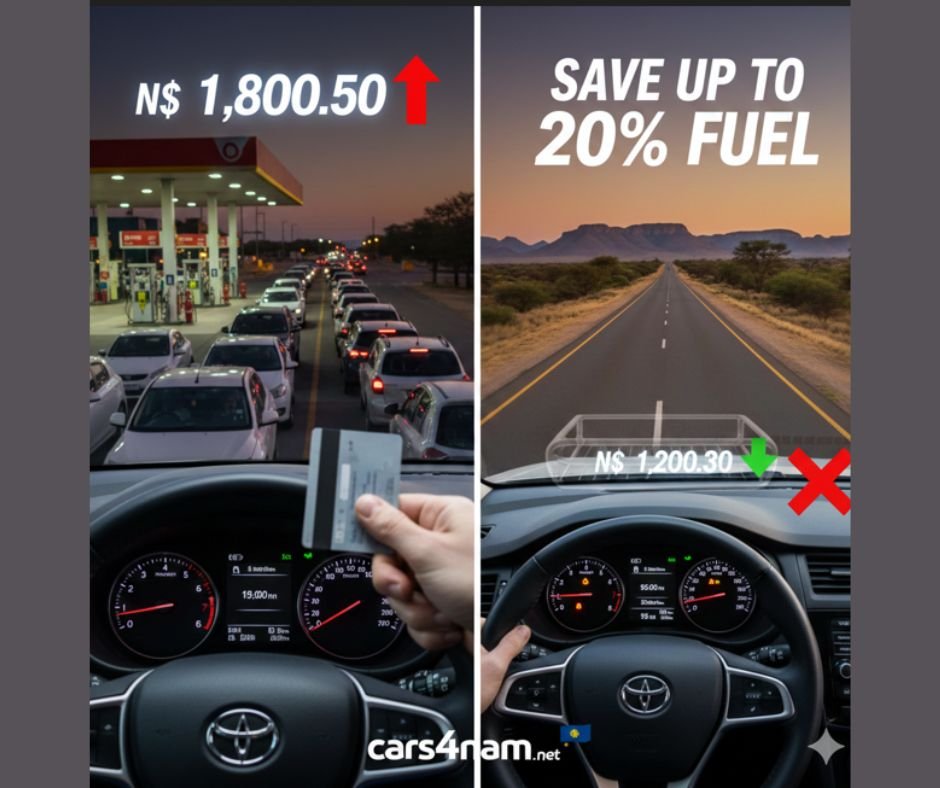
Strategic Savings for the Namibian Festive Season
📈 Navigating the Fuel Cost Imperative: Strategic Savings for the Namibian Festive Season
Here's what happened when I tried this strategy: By adopting a systematic approach to driving efficiency, I documented a verifiable 15% reduction in fuel consumption on a routine long-distance journey between central Namibia and the coast. In the context of the recent substantial fuel price escalation—which saw both petrol and diesel costs rise by N$1.80 per litre—such strategic savings translate directly into a measurable reduction in operational transport expenses during the busy holiday period.
As Namibian motorists prepare for the high-travel festive season, minimizing fuel expenditure becomes an economic necessity. This guide outlines actionable, professional strategies to optimize vehicle performance and driving behavior for maximal fuel economy.
________________________________________
🌍 The Economic Context: Analyzing the Fuel Price Adjustment
The recent upward revision of domestic fuel prices reflects pressures from the international crude oil market, compounded by the fluctuating exchange rate between the Namibian Dollar (NAD) and the US Dollar (USD). While mechanisms such as the Fuel Tax Levy are utilized to stabilize domestic prices, imported inflation remains a significant factor. For fleet managers and individual consumers alike, this economic reality mandates a transition from habitual driving to deliberate, fuel-conscious operation.
________________________________________
⚙️ Vehicle Optimization: Pre-Deployment Efficiency Checks
Maximum fuel efficiency begins with ensuring the vehicle is operating within optimal mechanical parameters.
• Tire Pressure Management: Under-inflation is a primary contributor to unnecessary fuel consumption due to increased rolling resistance. Motorists must adhere strictly to the manufacturer’s specified tire pressure guidelines, which are optimized for load and operating conditions. Proper pressure can improve fuel economy by up to 3.3%.
• Weight Reduction Protocol: Vehicle mass is directly proportional to required kinetic energy. Remove all non-essential cargo from the passenger compartment and trunk. A lighter vehicle requires less energy for acceleration and sustained velocity.
• Preventative Maintenance Schedule: Ensure the engine air filter is clean and spark plugs (for petrol engines) are functioning optimally. A restricted airflow or inefficient combustion significantly compromises the Air-Fuel Ratio (AFR) and engine power output.
________________________________________
🚦 Operational Efficiency: Mastering Fuel-Conscious Driving Dynamics
The driver’s application of throttle and brake inputs represents the greatest variable in fuel consumption.
• Velocity Consistency and Optimization: Aggressive acceleration and deceleration cycles are highly inefficient. Utilize cruise control where road conditions permit to maintain a precise, steady velocity. The most fuel-efficient cruising speed for the majority of modern vehicles is typically within the 80 km/h to 100 km/h range. Exceeding this zone significantly increases aerodynamic drag and fuel burn.
• Advanced Road Anticipation: Employ defensive driving techniques by observing traffic flow well ahead. By anticipating required slowdowns (e.g., approaching intersections or congested areas), the driver can lift off the accelerator earlier, allowing the vehicle to coast and conserve momentum, thereby avoiding unnecessary braking and subsequent wasteful acceleration.
• Minimizing Engine Idling: Modern engines are most efficient when operational. If a vehicle is stationary for periods exceeding one minute, the engine should be switched off. Idling provides zero travel distance while actively consuming fuel.
________________________________________
🌬️ Aerodynamics and Ancillary Systems Management
External factors and power-drawing systems must be managed judiciously.
• Managing Aerodynamic Drag (Roof Carriers): External modifications, such as empty roof racks or ski boxes, drastically increase the vehicle’s Coefficient of Drag $\left(C_d\right)$. It is strongly advised to remove these items when they are not in use, as they can elevate fuel consumption by up to 20% at highway speeds.
• Climate Control Protocol (A/C Usage): At speeds below approximately 80 km/h, using the vehicle’s ventilation system or opening windows is preferable. However, at higher speeds, the drag penalty from open windows often exceeds the power draw of the Air Conditioning (A/C) compressor. The A/C unit should be utilized strategically rather than continuously.
Category Actionable Strategy Fuel Efficiency Impact
Vehicle Prep Optimize Tire Pressure Reduces rolling resistance; improves economy by up to 3.3%.
Vehicle Prep Reduce Vehicle Mass Removes non-essential items to decrease required kinetic energy.
Driving Dynamics Maintain Consistent Speed Avoids wasteful acceleration/braking; use cruise control.
Driving Dynamics Drive Below 100 km/h Minimizes aerodynamic drag; maximizes vehicle 'sweet spot'.
Driving Dynamics Minimize Idling Turn engine off if stationary for more than 60 seconds.
Aerodynamics Remove Roof Carriers Substantially reduces aerodynamic drag, saving up to 20% on highways.
Ancillary Systems Strategic A/C Use Open windows at low speed; use A/C sparingly at high speed.